The Dawn of Intentional Community: Welcome to Reply Rules
Substack has fundamentally altered the landscape of digital publishing over the past few years. What began as a minimalist platform for email newsletters has morphed into a sprawling ecosystem for independent writers, podcasters, and thinkers. The platform successfully proved that creators could build sustainable, direct-to-consumer media businesses without relying on the whims of algorithmic social media feeds or traditional advertising models. However, as the platform has grown, so has the complexity of managing the communities that form around these publications. In June 2026, Substack addressed one of the most persistent pain points for its creators with the launch of Reply Rules, a sophisticated suite of moderation tools designed to give publishers unprecedented control over their comment sections. This update is not merely a quality of life improvement; it is a strategic maneuver that acknowledges the unique challenges of the creator economy and the heavy burden of community management.
The internet has a long, complicated history with comment sections. From the early days of Usenet and blog forums to the toxic wastelands of modern social media, the space beneath the content has often been just as defining as the content itself. For independent creators, the comment section is supposed to be a digital living room, a place for intimate conversation and shared discovery. Yet, without the massive moderation teams of legacy tech giants, solo writers have found themselves overwhelmed by spam, bad-faith arguments, and relentless trolling. Reply Rules represents Substack's most ambitious attempt to solve this crisis, shifting the paradigm from reactive cleanup to proactive boundary setting.
The Evolution of Substack and the Moderation Challenge
To understand the significance of Reply Rules, one must look at the trajectory of Substack as a platform. Initially, the focus was entirely on the written word and the delivery mechanism of the email inbox. Comments were an afterthought, a simple text box at the bottom of a post where readers could leave their thoughts. For a writer with a few hundred subscribers, managing these comments was a breeze. A writer could read every single reply, respond personally, and foster a tight-knit community.
But as publications scale, the dynamics change dramatically. A writer who suddenly finds themselves with fifty thousand subscribers and an active, bustling comment section is no longer just a writer. They are suddenly a community manager, a moderator, and a conflict resolver. The open internet is notoriously hostile, and even the most well-intentioned comment sections can quickly devolve into toxic arguments, spam, or off-topic rants. For a solo creator, the mental toll of sifting through hundreds of comments to find the constructive ones, while simultaneously blocking trolls and deleting spam, is immense. Many creators have spoken openly about the burnout associated with managing their communities, noting that the very feature designed to foster connection was instead draining their creative energy. Substack recognized this growing crisis and realized that to retain its top-tier talent, it needed to provide robust tools to protect their time and mental health.
Unpacking the Reply Rules Feature
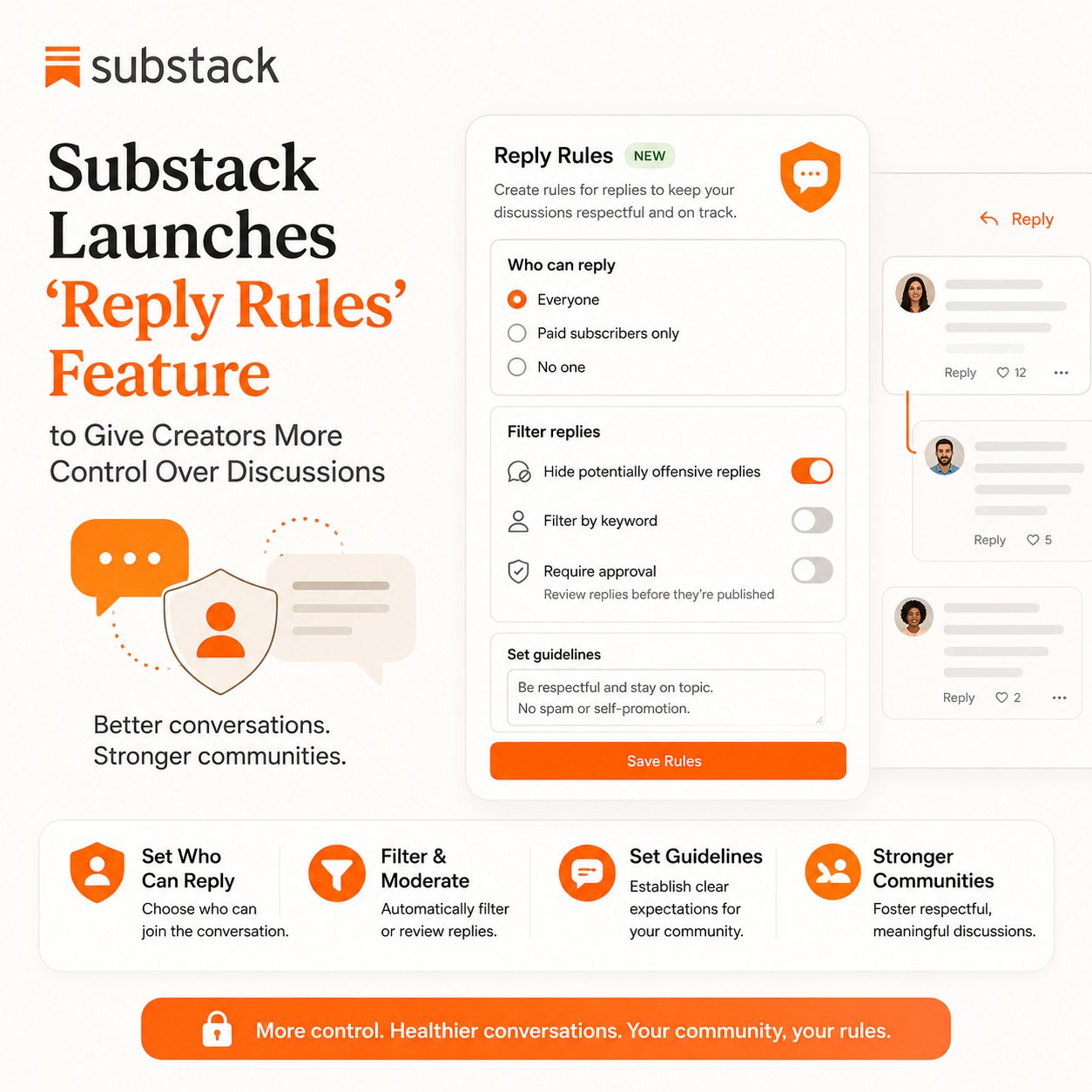
The new Reply Rules feature is a comprehensive dashboard that allows creators to set granular, automated parameters for who can reply to their posts and under what conditions. Instead of reacting to bad behavior after it happens, creators can now proactively define the boundaries of their digital living room. When a creator navigates to the settings for a specific post or their global comment preferences, they are presented with a series of toggles and dropdown menus. These controls are designed to be intuitive, requiring no technical expertise to implement.
The core philosophy behind Reply Rules is flexibility. A political newsletter might require strict moderation to prevent partisan flame wars, while a local community blog might want to encourage open, free-wheeling discussions among verified locals. Substack has provided the building blocks for both scenarios, allowing the tool to adapt to the unique culture of every individual publication.
Tier-Based Access and the Premium Comment Section
Perhaps the most impactful control within Reply Rules is the ability to restrict commenting based on subscription status. Creators can now choose to limit replies exclusively to paid subscribers, or perhaps to those who have been subscribed for a certain number of months. This feature fundamentally changes the economic model of community engagement. By walling off the comment section, creators are transforming it from a public utility into a premium perk. Readers are no longer just paying for the articles; they are paying for access to the intellectual salon that exists in the replies. This not only elevates the quality of the discussion by ensuring that only those with a financial stake in the publication can participate, but it also adds tangible, recurring value to the paid tier.
Friction as a Feature: Account Age and Activity
To combat the rampant issue of bot accounts and drive-by trolling, creators can set a rule that only users whose Substack accounts have been active for a certain number of days can leave a comment. This simple friction mechanism is incredibly effective at filtering out automated spam and bad-faith actors who create new accounts solely to harass writers. Trolls thrive on instant gratification; by introducing a temporal barrier, Substack makes it mathematically inefficient for bad actors to disrupt a community.
Advanced Semantic and Keyword Filtering
While basic profanity filters have existed for years, Reply Rules allows creators to input custom lists of terms, slurs, or specific phrases that are automatically hidden or flagged for review. More impressively, the system utilizes natural language processing to understand the context of a comment. A heated but respectful debate about a controversial topic will be allowed to stand, while a comment that crosses the line into personal abuse or hate speech will be automatically quarantined before the creator even wakes up.
The Cooling-Off Period: Slow Mode
For highly controversial posts that are guaranteed to generate a massive influx of comments, creators can enable a rule that limits how frequently a user can post. This cooling-off period forces readers to pause and think before they hit submit, drastically reducing the emotional reactivity that often fuels toxic comment threads. It encourages deliberate, thoughtful responses rather than rapid-fire emotional venting.
The Business Case for Community Control
While the mental health benefits for creators are obvious, the business implications of Reply Rules are equally profound. In the creator economy, community is the ultimate moat. Information is cheap and easily replicated, but a vibrant, engaged community of readers who interact with each other and the author is incredibly difficult to copy. By allowing creators to restrict comments to paid subscribers, Substack is effectively turning the comment section into a premium perk. This dynamic directly impacts subscription retention. When a reader feels a sense of belonging to an exclusive, high-quality community, their likelihood of canceling their subscription drops significantly.
Furthermore, high-signal discussions attract more high-quality readers. When a new visitor lands on a Substack post and sees a thoughtful, nuanced debate in the comments, they are much more likely to subscribe than if they see a wasteland of spam and personal attacks. Reply Rules ensures that the storefront of a publication always looks its best, acting as a powerful conversion tool for prospective subscribers.
| Metric | Before Reply Rules | After Reply Rules |
|---|---|---|
| Moderation Time | Hours per week (Reactive) | Minutes per week (Proactive) |
| Comment Quality | Mixed (High noise-to-signal) | Curated (High signal-to-noise) |
| Paid Tier Value | Content only | Content + Exclusive Community |
| Creator Burnout | High | Significantly Reduced |
Impact on Reader Experience and Community Dynamics
From the reader's perspective, the introduction of Reply Rules will subtly but significantly alter the experience of engaging with their favorite writers. For the casual, free reader, the inability to comment on certain posts might initially feel exclusionary. However, this friction is intentional. It encourages readers to deepen their relationship with the publication if they wish to participate in the conversation. It transforms the comment section from a chaotic public square into a curated, members-only club.
For the paying subscriber, the experience is vastly improved. The signal-to-noise ratio in the comment section will skyrocket. Readers will spend less time scrolling past irrelevant rants and more time engaging with insightful analysis from peers who share their interests. This fosters a sense of camaraderie and intellectual intimacy that keeps readers coming back day after day. Moreover, the presence of clear, enforced rules creates a psychological safety net. When readers know that the creator has actively curated the space and removed the worst elements of internet toxicity, they are more likely to share vulnerable, personal, or highly detailed thoughts. This level of authenticity is the holy grail of online community building.
Comparison with Other Publishing Platforms
To fully appreciate the leap forward that Substack has made, it is helpful to compare Reply Rules with the community management tools offered by competing platforms. The newsletter and creator economy space is fiercely competitive, and community features are often the deciding factor for writers choosing where to host their work.
Ghost and the Manual Approval Burden
Ghost, the popular open-source publishing platform, offers basic comment moderation, but it relies heavily on third-party integrations or manual approval for every single comment. This manual approval process is a massive time sink for creators. While Ghost provides excellent design flexibility, its native community tools have lagged behind Substack's integrated approach. Substack's Reply Rules, by contrast, operate automatically in the background, freeing the creator from the role of a full-time bouncer.
Patreon and Beehiiv: Different Priorities
Patreon has long offered community features, but its comment sections are often tied to specific tiers in a clunky, disjointed manner that lacks the seamless integration of a native newsletter platform. Beehiiv, a rapidly growing newsletter platform, has focused heavily on ad networks and referral programs, largely neglecting native community building tools. Substack, by contrast, has built Reply Rules natively into its core infrastructure. The rules apply seamlessly across the web app, the mobile app, and the email client, ensuring a consistent experience regardless of how the reader is consuming the content.
| Platform | Native Comment Rules | Tier-Based Restrictions | Automated Moderation |
|---|---|---|---|
| Substack | Advanced (Reply Rules) | Yes | Yes (AI & Keyword) |
| Ghost | Basic | Limited | Manual / Third-Party |
| Patreon | Moderate | Yes | Basic |
| Beehiiv | None Native | No | No |
Potential Drawbacks and the Echo Chamber Risk
No feature is without its critics, and Reply Rules is no exception. The most common criticism leveled against tiered or restricted comment sections is the risk of creating an echo chamber. If a creator only allows paid subscribers to reply, they are inherently filtering out the free audience. This means the creator might only hear from their most dedicated fans, potentially missing out on constructive criticism, diverse perspectives, or early warning signs of a shifting audience sentiment. The danger is that the comment section becomes an endless loop of mutual validation rather than a place for rigorous intellectual debate.
Furthermore, there is the risk of alienating the free audience. The traditional blog comment section was a democratic space where anyone could share their thoughts. By walling off the discussion, creators might inadvertently signal that they only care about their paying customers, potentially stifling the organic growth that comes from free readers sharing their thoughts and inviting others to join the debate. Creators must therefore use Reply Rules with intention and transparency. It is highly recommended that writers clearly communicate why they have implemented certain rules, framing it as a way to maintain a high-quality environment rather than a way to silence dissent.
The Future of Substack and Community Building
The launch of Reply Rules is just one piece of a much larger puzzle. Substack has been aggressively expanding its community features over the past two years, most notably with the introduction of Substack Chat and Substack Notes. Reply Rules is the connective tissue that will eventually tie all these features together. In the future, we can expect to see these rules expand beyond just post comments. Imagine a scenario where a creator can set a global rule that anyone who violates the community guidelines in the comment section is automatically restricted from joining their private Chat rooms.
Or perhaps Substack will introduce AI-assisted moderation, where the platform's language models automatically summarize long comment threads or flag nuanced violations of the creator's specific rules. The broader trend in the tech industry is a move away from the massive, centralized town squares of the 2010s toward smaller, curated, and highly moderated digital gardens. Substack is positioning itself as the premier landlord for these digital gardens, providing the tools necessary for creators to cultivate beautiful, thriving spaces free from the weeds of internet toxicity.
Conclusion: A New Era of Intentional Digital Spaces
The launch of the Reply Rules feature marks a maturation point for Substack. It is an acknowledgment that the creator economy is not just about writing and publishing; it is about the delicate, often difficult work of human connection. By giving creators the power to proactively manage their discussions, Substack is protecting its most valuable asset: the writers themselves. For creators, this feature offers a lifeline against moderation burnout, allowing them to reclaim their time and focus on what they do best. For readers, it promises a higher quality of discourse, fostering environments where genuine connection and intellectual exploration can flourish.
As the digital landscape continues to fragment and evolve, the platforms that provide the best tools for community building will be the ones that thrive. With Reply Rules, Substack has firmly planted its flag as the leader in this new era of intentional, creator-owned internet spaces. The days of the wild west comment section are over; the era of the curated digital salon has arrived.
Related Topics
#Substack #CreatorEconomy #CommunityManagement #ReplyRules #DigitalPublishing #NewsletterBusiness #ContentCreators #OnlineCommunity #TechNews #SubstackUpdate #WriterTools #DigitalMedia #InternetCulture #ModerationTools